Ocular oncology
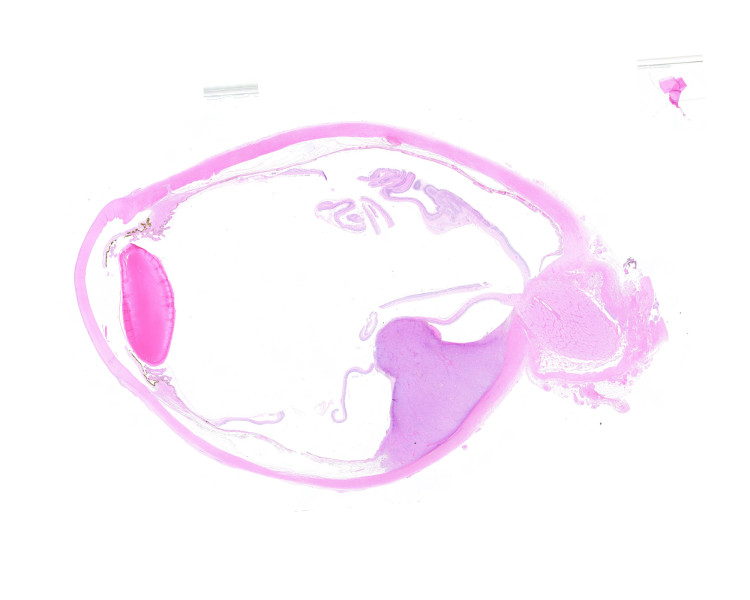
Research on tumors of the eye is focused on two types of melanoma: melanoma inside the eye is called uveal melanoma and melanoma on the surface of the eye is called conjunctival melanoma. Both types of melanoma are rare when compared to the more common melanomas of the skin.
The research is concentrated on prognostication, that is predicting outcome for risk of metastasis and death. Our group has contributed to show that loss of chromosome 3 and gain of chromosome 8q carries a worse prognosis in uveal melanoma. Moreover, we have shown that immunohistochemical loss of BAP1 expression (gene located on chromosome 3) is an easy and cheap test to identify patients with a poor prognosis. The most recent line of research focuses on melanomas of the iris that have a very good prognosis when compared to other uveal melanomas and therefore might have a different molecular background. Understanding the different pathways that lead to melanoma and metastasis may lead to new targets for treatment of patients with metastatic uveal melanoma.
For conjunctival melanoma probable prognostic markers have been identified and our current research tries to find if alterations affecting chromosome telomere lengthening are indicating a high risk for metastasis. An international collaborative study is underway to try and confirm newly proposed AJCC TNM staging based on thickness of the tumor as prognosticator.
Neuro-oncology
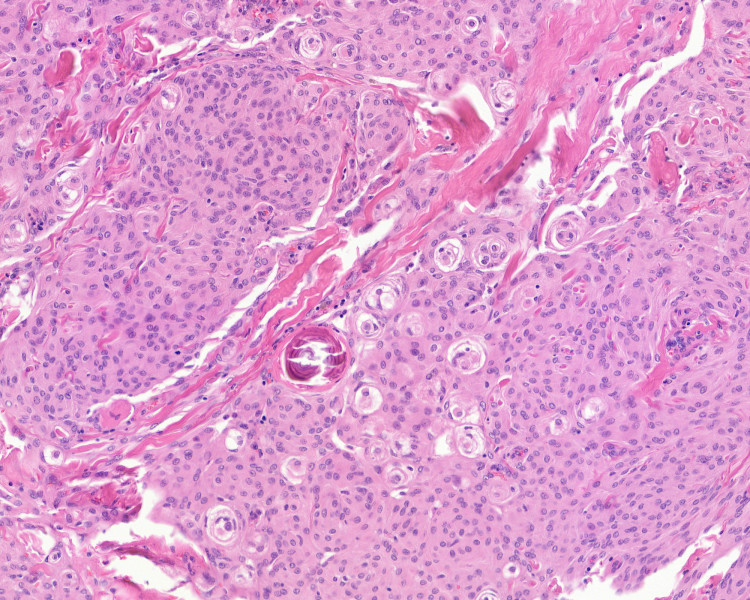
Research on brain tumors focuses on meningioma. Classical prognostics for meningioma concerned mainly the recognition of specific histomorphology subtypes and mitotic count. More recently our group has identified molecular markers that correlate to recurrence. Both molecular genetics concerning chromosome gains and specific mutations as well as epigenetic methylation profiling can more accurately predict outcome in equivocal cases. Specific histologic patterns in high grade diffuse adult gliomas have been described by us with primitive neuroepithelial components that may be recognized in these tumors.
Neurodegenerative disease
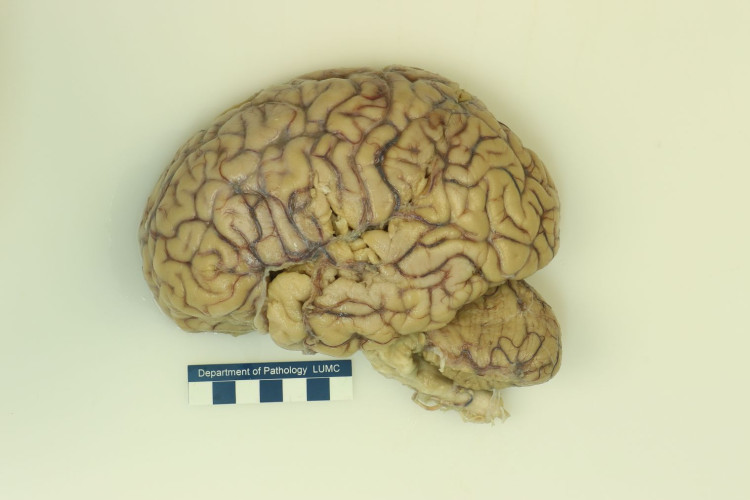
Research on neurodegenerative disease involves cohort brain banking studies on Huntington disease, CADASIL and cerebral amyloid angiopathy.
Key publications
Ophthalmic oncology
van Essen TH, van Pelt SI, Versluis M, Bronkhorst IH, van Duinen SG, Marinkovic M, Kroes WG, Ruivenkamp CA, Shukla S, de Klein A, Kiliç E, Harbour JW, Luyten GP, van der Velden PA, Verdijk RM, Jager MJ. Prognostic parameters in uveal melanoma and their association with BAP1 expression. Br J Ophthalmol. 2014 Dec;98(12):1738-43.
Vader MJC, Madigan MC, Versluis M, Suleiman HM, Gezgin G, Gruis NA, Out-Luiting JJ, Bergman W, Verdijk RM, Jager MJ, van der Velden PA. GNAQ and GNA11 mutations and downstream YAP activation in choroidal nevi. Br J Cancer. 2017 Sep 5;117(6):884-887.
Brouwer NJ, Verdijk RM, Heegaard S, Marinkovic M, Esmaeli B, Jager MJ. Conjunctival melanoma: New insights in tumour genetics and immunology, leading to new therapeutic options. Prog Retin Eye Res. 2022 Jan;86:100971.
Wierenga APA, Brouwer NJ, Gelmi MC, Verdijk RM, Stern MH, Bas Z, Malkani K, van Duinen SG, Ganguly A, Kroes WGM, Marinkovic M, Luyten GPM, Shields CL, Jager MJ. Chromosome 3 and 8q Aberrations in Uveal Melanoma Show Greater Impact on Survival in Patients with Light Iris versus Dark Iris Color. Ophthalmology. 2022 Apr;129(4):421-430.
Ventin M, Cattaneo G, Arya S, Jia J, Gelmi MC, Sun Y, Maggs L, Ksander BR, Verdijk RM, Boland GM, Jenkins RW, Haq R, Jager MJ, Wang X, Ryeom S, Ferrone CR. Chimeric Antigen Receptor T Cell with an Inducible Caspase-9 Suicide Gene Eradicates Uveal Melanoma Liver Metastases via B7-H3 Targeting. Clin Cancer Res. 2024 Aug 1;30(15):3243-3258.
Gelmi MC, Gezgin G, Kapiteijn E, Vu THK, Jager MJ, Verdijk RM. Tumour progression shows decrease in PD-L1 expression in matched metastases/primary uveal melanomas. Acta Ophthalmol. 2026 Mar;104(2):164-172. doi: 10.1111/aos.17559.
Neuro-oncology
van Opijnen MP, Broekman MLD, de Vos FYF, Cuppen E, van der Hoeven JJM, van Linde ME, Compter A, Beerepoot LV, van den Bent MJ, Vos MJ, Fiebrich HB, Koekkoek JAF, Hoeben A, Kho KH, Driessen CML, Jeltema HR, Robe PAJT, Maas SLN. Study protocol of the GLOW study: maximising treatment options for recurrent glioblastoma patients by whole genome sequencing-based diagnostics-a prospective multicenter cohort study. BMC Med Genomics. 2022 Nov 4;15(1):233.
Hielscher T, Sill M, Sievers P, Stichel D, Brandner S, Jones DTW, von Deimling A, Sahm F, Maas SLN. Clinical implementation of integrated molecular-morphologic risk prediction for meningioma. Brain Pathol. 2023 May;33(3):e13132.
Maas SLN, Sievers P, Weber DC, Weller M, van den Bent MJ, Mair MJ, Kros JM, Carparrotti F, von Deimling A, Salvador VF, Peerdeman SM, Casas-Martin J, Gorlia T, Sahm F, Preusser M. Independent prognostic impact of DNA methylation class and chromosome 1p loss in WHO grade 2 and 3 meningioma undergoing adjuvant high-dose radiotherapy: comprehensive molecular analysis of EORTC 22042-26042. Acta Neuropathol. 2023 Dec;146(6):837-840.
Chen WC, Choudhury A, Youngblood MW, Polley MC, Lucas CG, Mirchia K, Maas SLN, Suwala AK, Won M, Bayley JC, Harmanci AS, Harmanci AO, Klisch TJ, Nguyen MP, Vasudevan HN, McCortney K, Yu TJ, Bhave V, Lam TC, Pu JK, Li LF, Leung GK, Chan JW, Perlow HK, Palmer JD, Haberler C, Berghoff AS, Preusser M, Nicolaides TP, Mawrin C, Agnihotri S, Resnick A, Rood BR, Chew J, Young JS, Boreta L, Braunstein SE, Schulte J, Butowski N, Santagata S, Spetzler D, Bush NAO, Villanueva-Meyer JE, Chandler JP, Solomon DA, Rogers CL, Pugh SL, Mehta MP, Sneed PK, Berger MS, Horbinski CM, McDermott MW, Perry A, Bi WL, Patel AJ, Sahm F, Magill ST, Raleigh DR. Targeted gene expression profiling predicts meningioma outcomes and radiotherapy responses. Nat Med. 2023 Dec;29(12):3067-3076.
Maas SLN, Perry A, Sahm F. The evolving role of TERT alterations in meningioma risk stratification. Neuro Oncol. 2025 Dec 1;27(12):3041-3042.
Maas SLN, Tang Y, Stutheit-Zhao E, Rahmanzade R, Blume C, Hielscher T, Zettl F, Benfatto S, Calafato D, Sill M, Benotmane JK, Yabo YA, Behling F, Suwala A, Kardo H, Ritter M, Peyre M, Sankowski R, Okonechnikov K, Sievers P, Patel A, Reuss D, Friedrich MJ, Stichel D, Schrimpf D, Van den Bosch TPP, Beck K, Wirsching HG, Jungwirth G, Hanemann CO, Lamszus K, Etminan N, Unterberg A, Mawrin C, Remke M, Ayrault O, Lichter P, Reifenberger G, Platten M, Kacprowski T, List M, Pauling JK, Baumbach J, Milde T, Grossmann R, Ram Z, Ratliff M, Mallm JP, Neidert MC, Bos EM, Prinz M, Weller M, Acker T, Hartmann FJ, Preusser M, Tabatabai G, Herold-Mende C, Krieg SM, Jones DTW, Pfister SM, Wick W, Kalamarides M, von Deimling A, Heiland DH, Hovestadt V, Gerstung M, Schlesner M; German “Aggressive Meningiomas” Consortium (KAM); Sahm F. A microenvironment-determined risk continuum refines subtyping in meningioma and reveals determinants of machine learning-based tumor classification. Nat Genet. 2026 Feb;58(2):341-354.
Neurodegeneration
Tran DN, Bakx ATCM, van Dis V, Aronica E, Verdijk RM, Ouwendijk WJD. No evidence of aberrant amyloid β and phosphorylated tau expression in herpes simplex virus-infected neurons of the trigeminal ganglia and brain. Brain Pathol. 2022 Jul;32(4):e13044.
Bakels HS, Feleus S, van Dis V, de Bot ST. More than a co-incidence? Comment on: Amyotrophic lateral sclerosis is over-represented in two Huntington's disease brain bank cohorts: further evidence to support genetic pleiotropy of pathogenic HTT gene expansion. Acta Neuropathol. 2023 Feb;145(2):257-258.
Buijsen RAM, Hu M, Sáez-González M, Notopoulou S, Mina E, Koning W, Gardiner SL, van der Graaf LM, Daoutsali E, Pepers BA, Mei H, van Dis V, Frimat JP, van den Maagdenberg AMJM, Petrakis S, van Roon-Mom WMC. Spinocerebellar Ataxia Type 1 Characteristics in Patient-Derived Fibroblast and iPSC-Derived Neuronal Cultures. Mov Disord. 2023 Aug;38(8):1428-1442.
Rutten JW, Cerfontaine MN, Dijkstra KL, Mulder AA, Vreijling J, Kruit M, Koning RI, de Bot ST, van Nieuwenhuizen KM, Baelde HJ, Berendse HW, Mei LH, Ruijter GJG, Baas F, Jost CR, van Duinen SG, Nibbeling EAR, Gravesteijn G, Lesnik Oberstein SAJ. Bi-allelic NIT1 variants cause a brain small vessel disease characterized by movement disorders, massively dilated perivascular spaces, and intracerebral hemorrhage. Genet Med. 2024 Jun;26(6):101105.
Gravesteijn G, Dauwerse JG, Overzier M, Brouwer G, Hegeman I, Mulder AA, Baas F, Kruit MC, Terwindt GM, van Duinen SG, Jost CR, Aartsma-Rus A, Lesnik Oberstein SAJ, Rutten JW. Naturally occurring NOTCH3 exon skipping attenuates NOTCH3 protein aggregation and disease severity in CADASIL patients. Hum Mol Genet. 2020 Jul 21;29(11):1853-1863.